
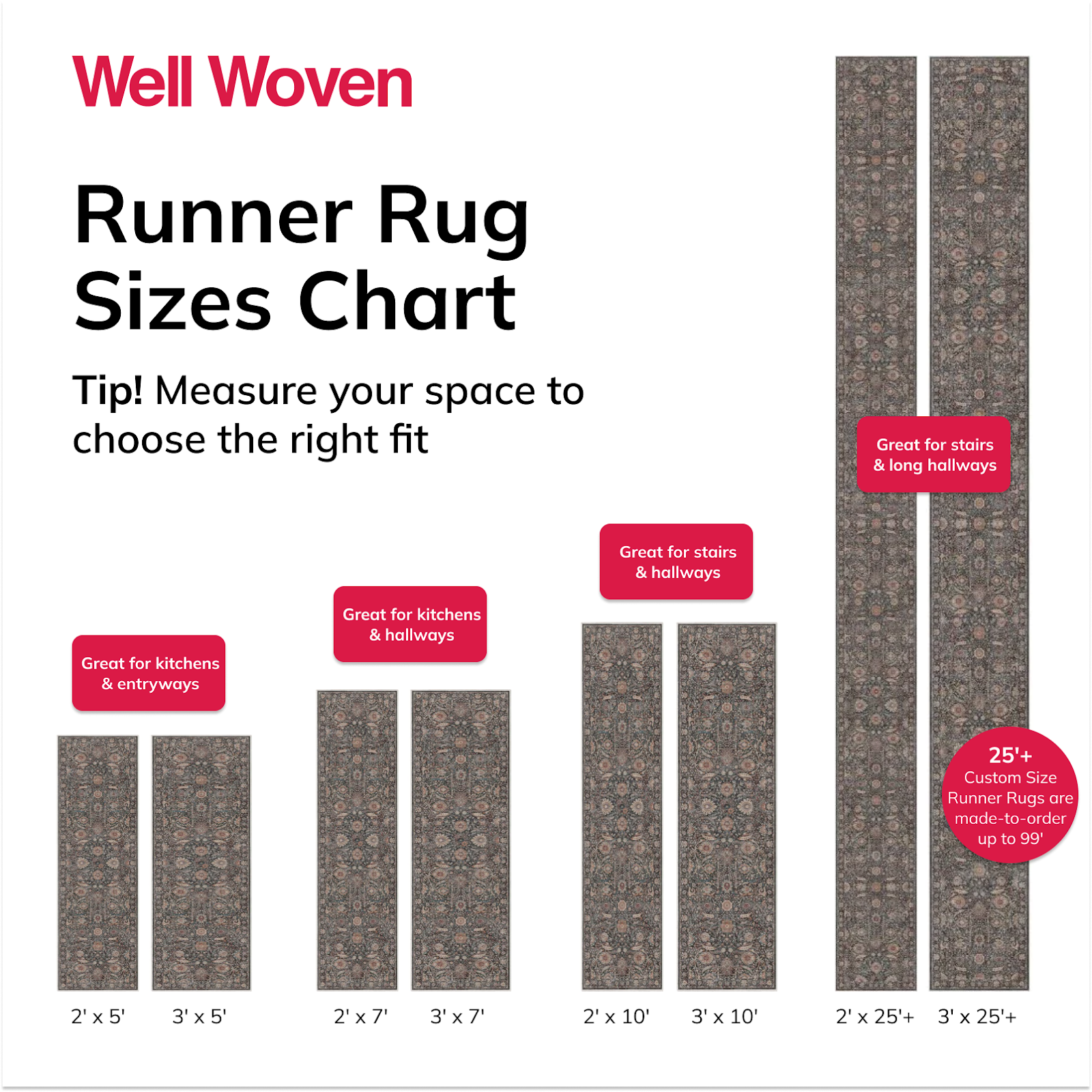
Runner rugs are a versatile and stylish way to enhance various spaces in your home, from hallways to kitchens. However, with so many size options available, choosing the right one can be a bit daunting. We previously covered the many considerations when determining your runner rug size. This blog post will guide you through the different sizes of runner rugs and share additional tips to help you find the perfect fit for your space, with many examples and a runner rug sizes chart.
Understanding Standard Runner Rug Sizes
Runner rugs typically come in several standard lengths and widths. The most common widths are 2 feet and 3 feet, while the lengths can vary from 5 feet all the way up to 99 feet or more. Popular lengths include 5 feet, 7 feet, 10 feet, 12 feet and 25 feet. Knowing these standard runner sizes can help you begin your search with a clear frame of reference.
Customizing for Narrow Spaces
Tight spaces, such as a narrow kitchen or hallway, require a more precise fit. For these areas, consider a runner that is narrower in width, around 2 feet. This size ensures the rug fits comfortably in the space without overwhelming it.
Tip: Always leave a few inches of floor visible on either side to create a balanced look. In narrow hallways, you may opt to minimize the bare floor down to 3 inches between runner and wall on all sides.
Choosing for Wider Areas
In larger, open spaces or a wide hallway, you can opt for wide runner rugs, typically around 3 feet. A wider runner makes a bolder statement and can handle more foot traffic than a narrow runner, making it practical for busy areas of your home.
Tip: In wider hallways, a good rule of thumb is to leave a distance of 6 to 8 inches between runner edges and walls. Remember, the key is balance. If you place a wide runner to demarcate a walkway in a more open space, you can create balance by ensuring even open space on either side.
Length Matters
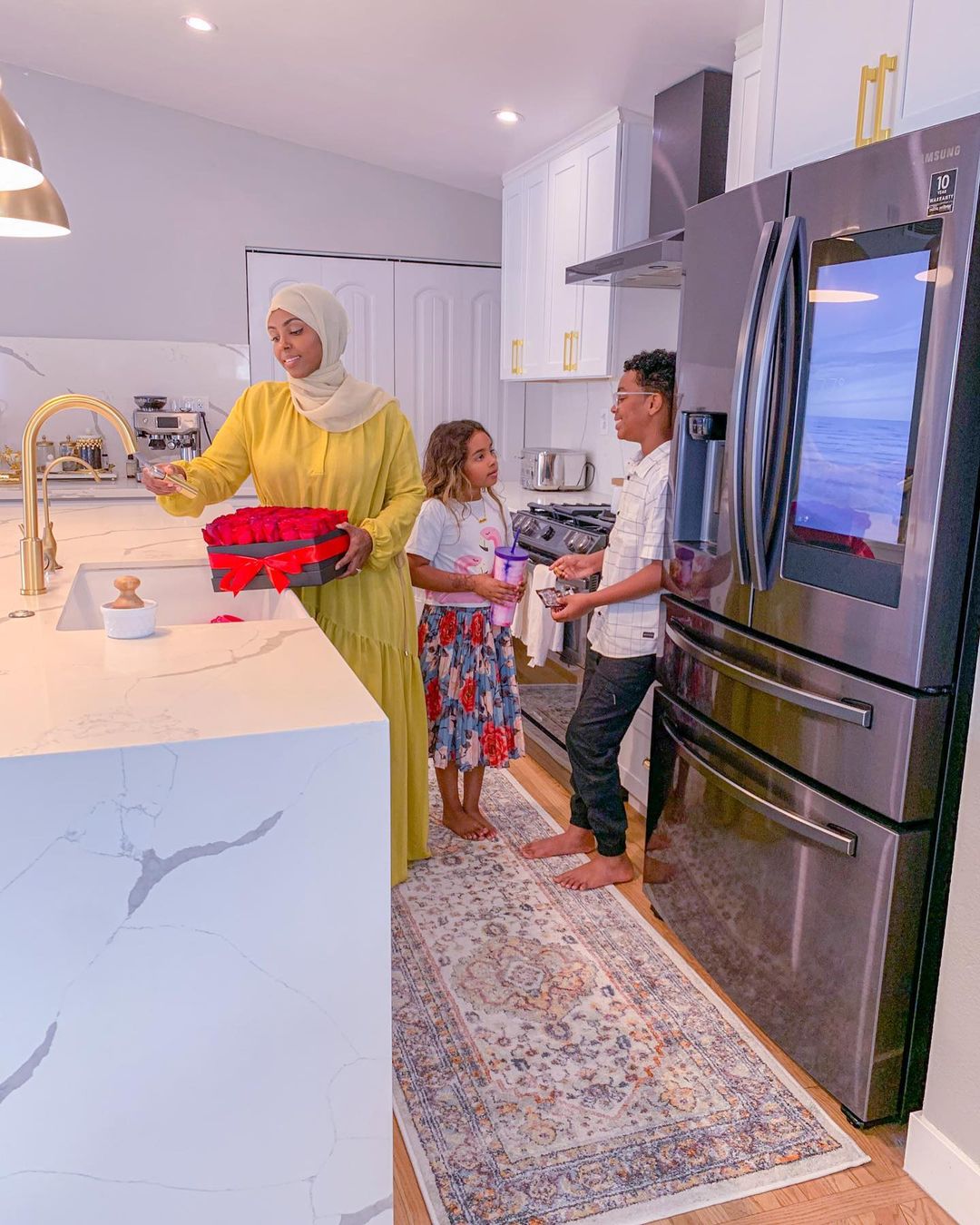
The length of your runner should be determined by the size of the space it’s intended for. A common mistake is choosing a rug that is too short, which can disrupt the visual flow of the space. Ideally, the runner should be slightly shorter than the length of the hallway or space, allowing for a balanced and proportionate appearance. Aim for about 12 inches, or 1 foot, difference between the length of your hallway and runner.
When in Doubt, Check Standard Runner Rug Sizes
Many spaces are built according to standard sizes. Most kitchens are well-suited for narrow, short runner sizes, including 2×5, 2×7 or 2×10 foot runner lengths. Standard entryways work with wide, short runners, such as 3×6 or 3×8 foot runner rugs. Hallways in mid-century single-family homes may look best with narrower widths, while newer constructions tend to build wider hallways that fit 3 foot widths. Standard stair width is 3 feet, so the narrow 2-foot width is ideal when installing stair runners .
Measuring Tips
Before purchasing, always measure your space. Use painter’s tape to mark out where the rug will go, which helps visualize how it will look and fit in the room.
Bespoke Options for Unique Spaces
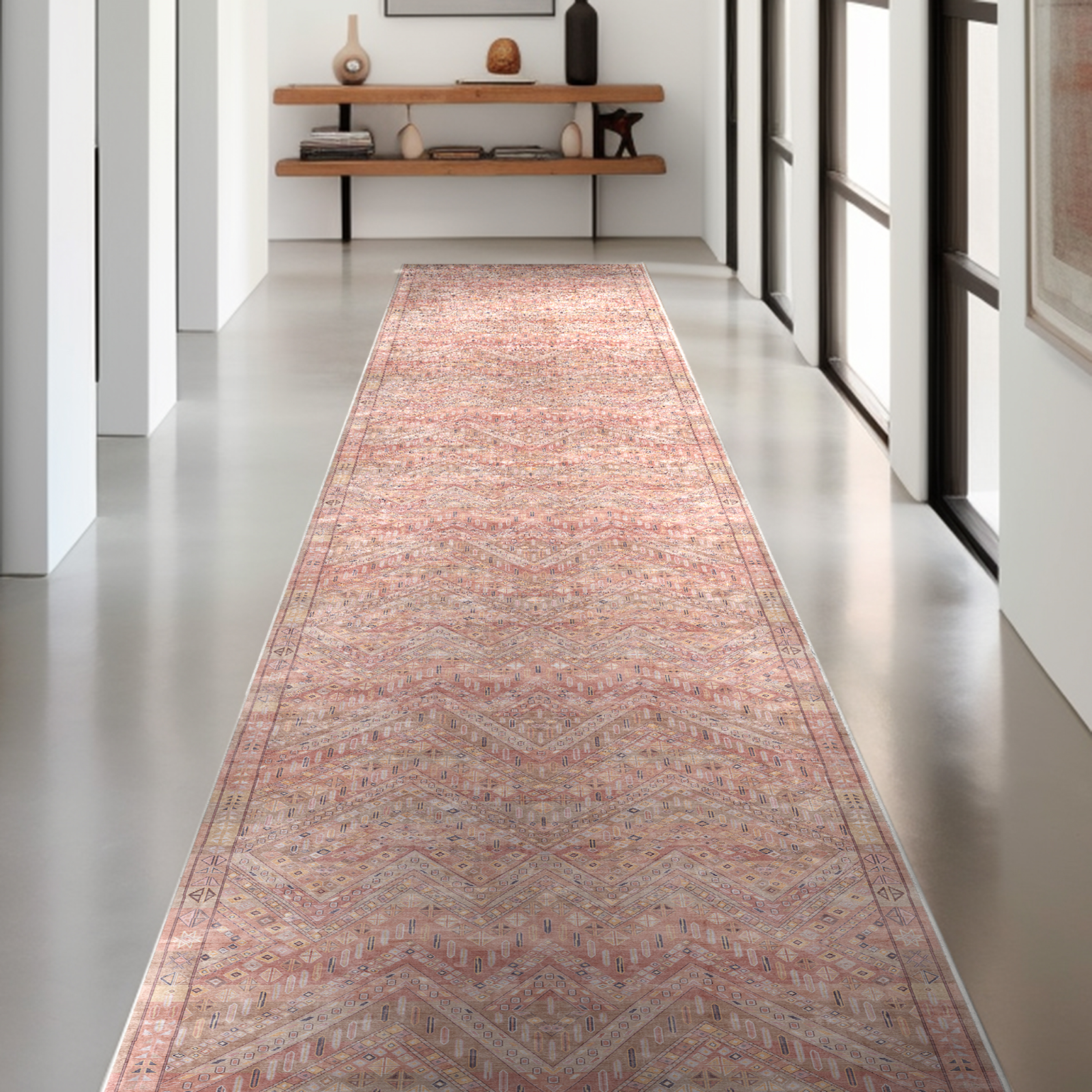
If standard sizes don’t suit your space, custom runner rugs are an excellent option. Many retailers offer bespoke services, allowing you to specify the exact length and width you need. This is particularly useful for unusually shaped or sized areas.
Layering for Added Dimension
In wider hallways, consider layering multiple narrow runners side by side (yes, you need a hallway runner rug). This can add depth and dimension to your space, as well as an opportunity to play with different colors and patterns.
The Importance of Scale
Always consider the scale of your space when selecting a runner rug. A large, open area can often handle a bold pattern rug, while a smaller, narrower space may benefit from a simpler, more understated design.
Maintenance and Practicality
Remember to consider practical aspects like cleaning and maintenance. Longer runners in high-traffic areas will require more frequent cleaning, so choose rug material—plastic, polypropylene, cotton, wool, nylon, jute— that suits your lifestyle.
Personal Style
Finally, let your personal style guide your choice. The runner rug is not just a functional item but also a chance to express your design sensibility. Consider a runner rug with stripes or an animal print runner rug for bold, timeless style, or perhaps a blue floral runner rug would bring just the right amount of color and warmth to your hallway. Decorating with multiple runner rugs in a hallway can create tons of visual interest and creativity.
Make It Yours
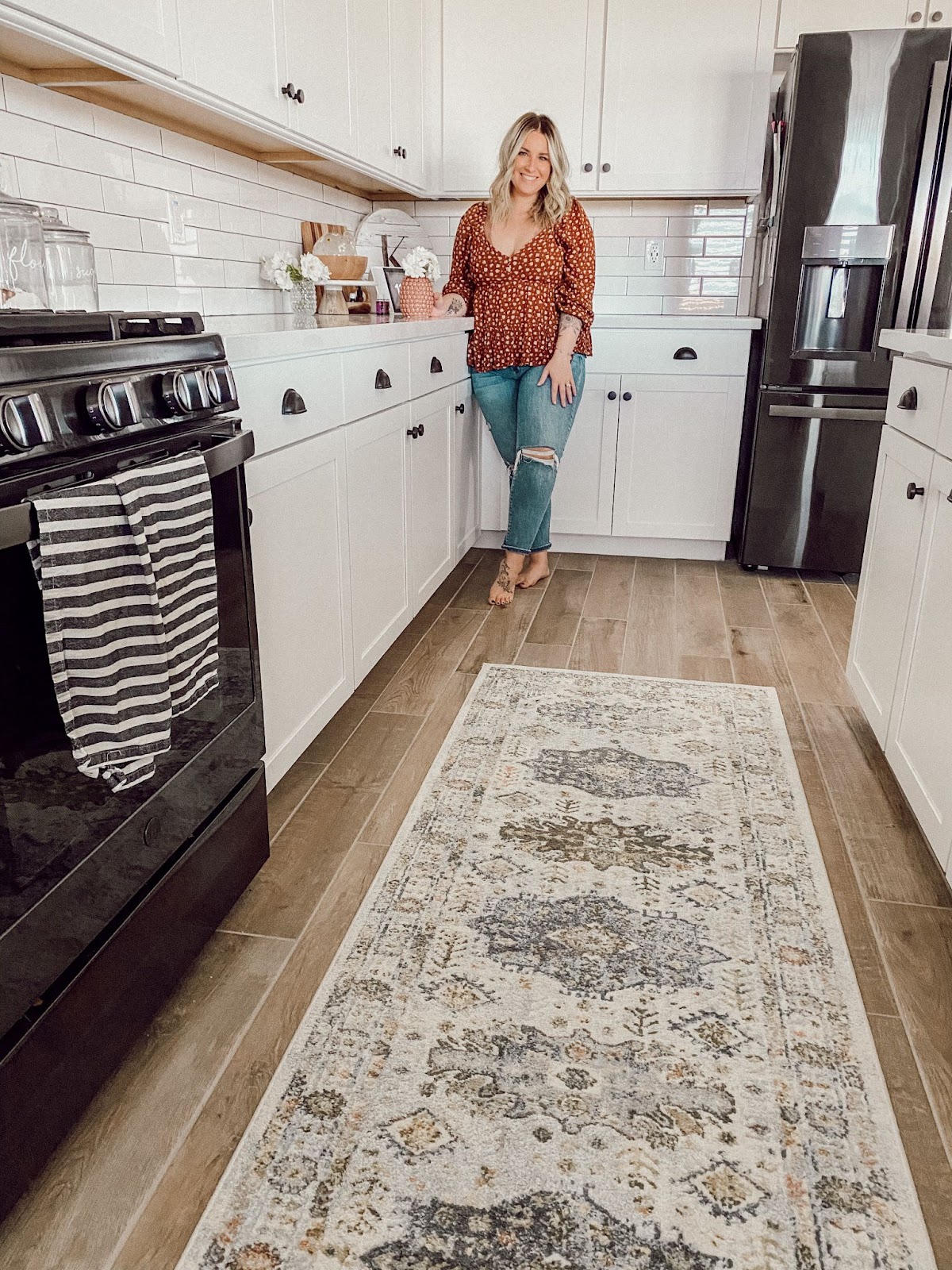
Choosing the right size runner rug can dramatically enhance the look and feel of your space. By understanding the various size options available and considering the specific needs of your space, you can select a runner rug that is both functional and stylish. Remember to balance practicality with personal taste to create a space that is uniquely yours!
Further Reading on Runner Rugs
For more information on runner rugs, check out the following posts:
- You Need a Hallway Runner and Here’s Why
- Design Tips for Decorating with Multiple Runners in a Hallway
- A Guide to Keeping Your Runner Rug Neat and Safely Secure
- How to Determine the Right Runner Rug Size for Your Hallway
- DIY Hacks to Install Stair Runners on a Budget
Stay Connected
Have you had success selecting the right size runner rug for your space? Show us by tagging us on Instagram or Facebook. We’d love to hear from you.
Subscribe to our Well Woven newsletter for even more updates, style inspiration, community stories, and sales alerts!
Leave a Reply